
A one-off seminar is forgotten by Friday.
A single day of inspiration rarely changes a habit built over years. By Monday everyone is back to the old ways of working.
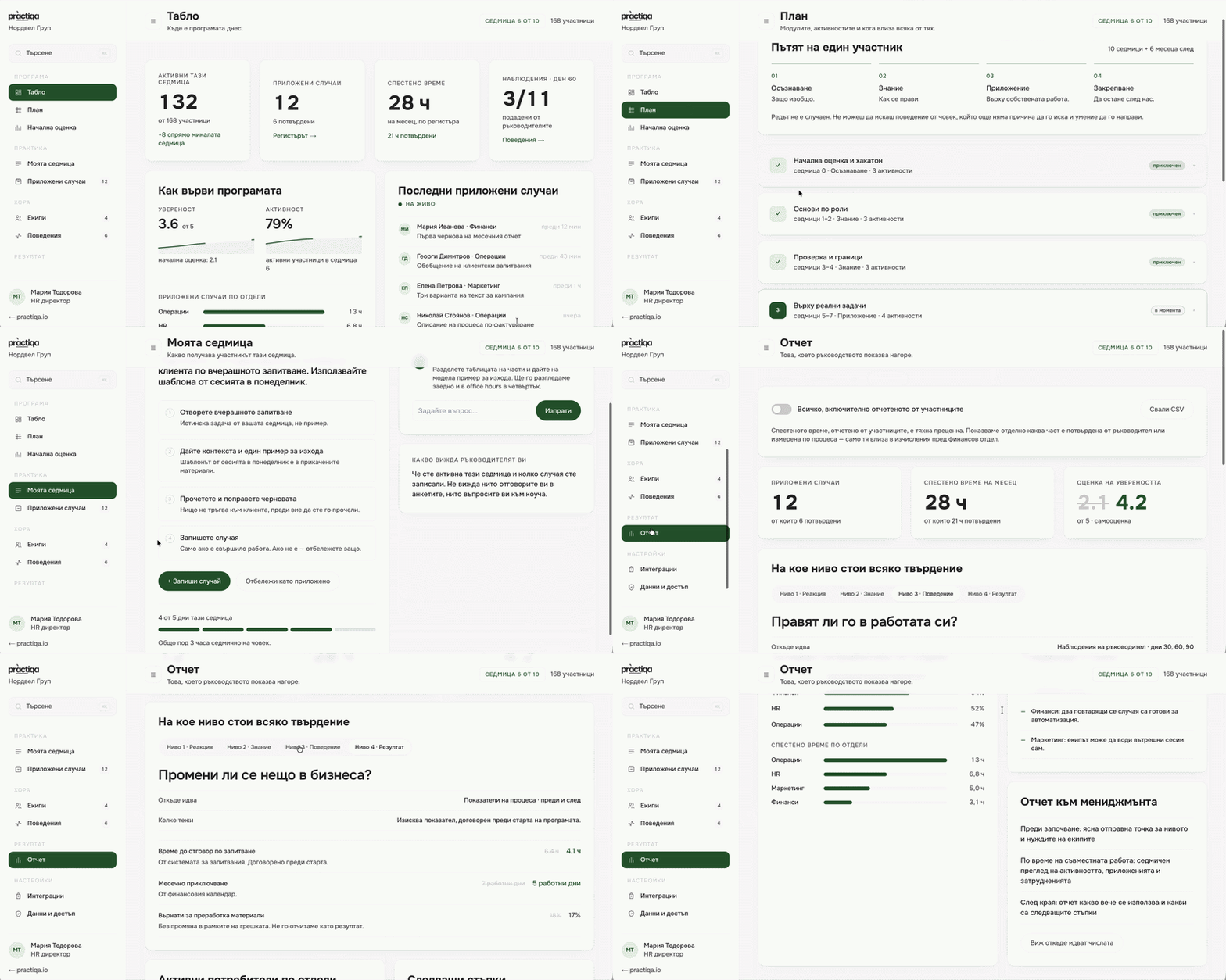
The integrated platform
The training, the everyday practice and the progress data in one place — for you and for your team.
before the start · 168 participants
InterestExperience
Week 6 of 10
Active this week
132
Applied use cases
34
Time saved
41 h
Latest applied use cases
Micro-practice · Tuesday
10–15 minUse AI to draft a first version of the reply to yesterday's customer enquiry. Use the template from Monday's session.
Mark as applied
4 of 5 days this week
A single day of inspiration rarely changes a habit built over years. By Monday everyone is back to the old ways of working.
When training is not tied to the work, it becomes extra weight and gets set aside.
Attendance, certificates and good feedback are not enough. The result is a visible change in the work the following month.
What makes us different
We support every level, so that you actually get the advantages of working with AI that everyone is talking about.
[01]
Before the programme begins, the platform shows the level, the attitudes and the real needs of each team, so we can focus the work where it will have the greatest effect.
[02]
The platform follows activity, applied use cases and results, spots where people get stuck, and provides support exactly when it is needed.
[03]
The practice continues after the programme, and managers get regular reports and clear guidance on where more support is needed.
You see what is being applied, not just who attended a session or a meeting
The platform turns training into a managed, measurable process of AI adoption. It sustains the practice, catches the sticking points early, and shows what is actually being used in the work. Leadership gets a clear picture of progress and concrete guidance on the next steps.
Marketing
82% · 34%
Finance
64% · 22%
HR
71% · 18%
Operations
58% · 15%
InterestExperience
High interest, limited experience: we start from each department's real tasks, not from general theory.
Micro-practice · Tuesday
Use AI to draft a first version of the reply to yesterday's customer enquiry. Use the template from Monday's session.
Async channel
Georgi D. · Operations
The model gets the report format wrong when the table is long. What am I missing?
Viktoria · programme coach
Split the table into parts and give the model an example of the output. We will look at it together in Thursday's office hours as well.
Every row is a task from the participant's own work, and carries with it where the number came from.
Ivan Kolev · No applied use case for 2 weeks.
Suggested action
Ten minutes in your next one-to-one: ask which task they tried it on and what did not work.
Reported by participants
28 h
Confirmed or measured
21 h
Confidence
3.6
Activity
79%
Observed behaviours
From our experience
The departments that come looking first are usually the ones with a lot of repetitive tasks, content, documents and information to process.
More channels, more data, more campaigns - without growing the team.
See more · 5See lessMarketing reacts faster and makes better-informed decisions, without the strategic and creative work disappearing into routine tasks.
There is more information every year, and the same amount of time to decide.
See more · 4See lessManagers spend less time collecting and ordering information, and more on deciding, working with their people and setting priorities.
More candidates, more employees, more communication - on the same capacity.
See more · 5See lessThe HR team cuts down the administrative work and frees up time for conversations, development and support, while decisions about people stay a human responsibility.
The reports have to be ready on time, even when the data is not.
See more · 4See lessThe finance team spends less time on manual processing and more on checking, analysing and explaining what the numbers mean for the business.
Small, repetitive tasks slow down the whole process.
See more · 4See lessThe result is faster delivery, more consistent work, and more time for the cases that genuinely need human judgement.
Tell us briefly what is happening in your team. You do not need to know which service you need — we will talk through the situation and suggest sensible next steps.
hello@practiqa.io